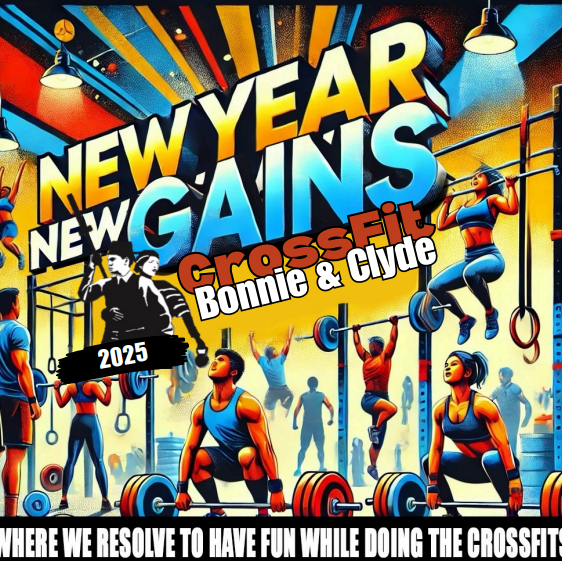
New Year, New Gains - A Choose Your Own Adventure Competition
About This Competition
Kickstart the New Year with a CrossFit competition unlike any other, where all skill levels, ages, and abilities are welcome, and every athlete has the chance to embark on his/her own unique fitness adventure!
Event Overview:
Entering into a New Year is about embracing fresh adventures, and at this event, competitors get to do just that! In this “Choose Your Own Adventure” competition, athlete teams of 2 (MM, MF, FF) will be in control of their workout journey. Rather than a one-size-fits-all challenge, participants will experience an element of strategic choice in each of 4 WODS... SO CHOOSE WISELY TO WIN THE "PRICE-LY". Whether you're a seasoned competitor or new to CrossFit, you’ll find your adventure at this one-of-a-kind competition!!
Source: Competition Corner
Your results are already here.
Every competition you've entered, ranked workout by workout. Search your name and find your entire history.
Search the ResultsThe conversation is already happening.
Athletes are commenting, posting photos, and reliving the workouts. Jump in.
See the CommunityReady for what's next?
Browse upcoming competitions near you — your next event is probably already listed.
Find Competitions Near MeHow much stronger are you than last year?
Log PRs for every lift and benchmark workout. Your progress tells the story — KettleBoards keeps track.
Track Your PRsDivisions
Top Results
Top 5 finishers per division. View full results →
| # | Athlete | Points |
|---|---|---|
| 1 | Sass & Ass | 7 |
| 2 | Sugar and Pepper | 7 |
| 3 | Team Graybeards | 13 |
| 4 | The Grand Grans | 13 |
| 5 | Hot and Flashy | 20 |
| # | Athlete | Points |
|---|---|---|
| 1 | Potentially Dangerous | 7 |
| 2 | Cookie Monsters | 9 |
| 3 | A PT and a PRO | 20 |
| 4 | Hangry Birds | 25 |
| 5 | Thruster? I hardly know her! | 25 |
| # | Athlete | Points |
|---|---|---|
| 1 | My Kip is Karma | 7 |
| 2 | Hold on I’m Dying | 11 |
| 3 | Off the Leash | 15 |
| 4 | The Cleaning crew | 22 |
| 5 | Beast Mode Babes | 27 |
Workouts
Choose Wisely
You and your partner will pick from the following list of movements and organize as you see fit into the CHIPPER Rep Scheme of 100, 75, 50, 25 and complete for time in an I GO, YOU GO format at the call of 3,2,1 GO!
- American Kettle Bell Swings
- Row for calories
- Kettle Bell Goblet Squats
- Single-arm Dumbbell Snatch
- Partner Med Ball Sit-ups
- Dumbbell Suitcase Deadlifts
Time Cap: 13 minutes – any unfinished reps will be ADDED to your time!
I GO, YOU GO = while one partner is working the other must be resting.
Rep Scheme = Chipper of: 100, 75, 50, 25
Weights per Division
New Years/Master Division:
- Kettle Bells, Dumbbells = 35/20#
- Wall Ball = 14/10#
New Gains Division:
- Kettle Bells, Dumbbells = 50/35#
- Wall Ball = 20/14#
Movement Standards
Kettle Bell Swings
1. Starting Position:
Feet: Start with your feet shoulder-width apart.
Grip: Grasp the kettlebell handle with both hands, using a firm, neutral grip.
Kettlebell Placement: The kettlebell should start on the ground between your feet, with the handle facing horizontally.
2. The Swing:
Hip Extension: At the top of the swing, your hips should be fully extended, with your glutes and core engaged.
3. Overhead Position:
End Range: The kettlebell should finish directly overhead with your arms straight and fully extended.
Elbows Locked: Your arms should not bend at the top. The kettlebell should be in line with your ears or slightly behind your head.
Neutral Spine: Ensure your back remains neutral and your ribs are not flaring out. The kettlebell should be controlled at the top, not dropping or pulling you out of alignment.
4. Reps and Range of Motion:
Full Reps: For the rep to count, the kettlebell must reach the full overhead position with arms locked out. A failure to achieve this will result in a "no rep."
Kettle Bell Goblet Squats
1. Starting Position:
Kettlebell Placement: Hold the kettlebell by the horns (the sides of the handle) OR the bell with both hands.
Chest Up: Maintain an upright posture with your chest lifted and your shoulders back.
2. The Squat Descent:
Full Range of Motion: Lower yourself down until your hips are below parallel with your knees (hip crease must pass below the top of the knee).
Kettlebell Position: Keep the kettlebell stable and close to your chest throughout the entire movement. Your torso should remain upright, and the kettlebell should not pull you forward.
3. Bottom Position:
Hip Depth: At the bottom of the squat, your hips should be below the level of your knees, maintaining proper squat depth.
4. The Ascent (Standing Up):
Hips Fully Extended: At the top of the movement, stand up fully with your hips and knees locked out. The kettlebell should still be in the goblet position at your chest, and your chest should remain upright.
5. Reps and Range of Motion:
Full Reps: For each rep to count, the kettlebell must remain close to the chest, the hips must pass below the knees at the bottom, and you must stand up fully with hips and knees locked at the top.
Range of Motion: Proper depth is crucial—failure to squat below parallel or not standing up fully will result in a "no rep."
Single Arm Dumbbell Snatch
1. Starting Position:
Feet: Start with your feet shoulder-width apart or slightly wider for stability. The dumbbell should be placed on the ground between your feet.
Free Hand Position: The non-working hand may be extended out to the side, or remain relaxed but must not assist the lift NOR be placed on the knee.
2. The Pull:
Full Extension: Achieve full extension of the hips and knees as you pull the dumbbell off the ground.
3. The Overhead Catch:
Arm Fully Extended: As you complete the snatch, catch the dumbbell overhead with your arm fully extended. The elbow should be locked out, and the dumbbell must be stable directly above your shoulder or slightly behind the head.
Hips Locked Out: At the top of the movement, ensure that your hips are fully extended, with your knees straight and standing tall.
4. The Transition: The transition of the dumbbell from one hand to another MUST HAPPEN ON THE GROUND with both heads of the dumbbell on the ground between your feet.
5. Alternating Arms:
Switching Hands: You MAY OR MAY NOT choose to switch arms during the workout HOWEVER, the dumbbell must be lowered to the ground between each rep before switching hands. You cannot switch hands mid-air.
Touch-and-Go: The dumbbell must make contact with the ground before starting the next rep. Both ends of the dumbbell should touch the ground simultaneously.
6. Reps and Range of Motion:
Complete Rep: A rep is considered complete when the dumbbell reaches overhead with the arm locked out, hips and knees fully extended, and the dumbbell is under control AND THEN brought back to the ground with both heads of the dumbbell touching the ground.
Full Range of Motion: The dumbbell must start on the ground and be lifted to the full overhead position in one continuous motion without pausing or resting on the shoulders (no clean and press allowed).
Partner Med Ball Sit-ups
1. Starting Position:
Partners' Setup: Both athletes should sit facing each other, with their feet touching or slightly overlapping to provide a stable base - Linking feet is totally fine!
Distance Between Partners: Partners should sit close enough that they can easily pass the medicine ball between them without "tossing" the ball.
Medicine Ball Placement: One athlete starts with the medicine ball, holding it at their chest with both hands.
2. The Sit-Up Movement:
Lie Back: Both athletes should lower their upper bodies to the ground in sync. The back should touch the ground fully.
Arms and Ball Position: The athlete with the medicine ball must hold the ball at their chest as they lie back, keeping control of the ball throughout the entire movement. Athlete then touches ball to ground overhead as they lie back.
3. The Ascent (Sit-Up):
Sit-Up Motion: Both athletes perform a sit-up to a fully upright position.
Pass the Ball: Once the athletes reach the top of the sit-up, the athlete with the ball will pass it to their partner. The ball should be passed in a controlled manner, directly from chest to chest.
Catching the Ball: The receiving athlete must receive the medicine ball at chest height, maintaining control and positioning it back against their chest as they prepare to perform their next sit-up.
4. Reps and Range of Motion:
Full Rep: A rep is complete when both athletes perform a full sit-up (back touching the ground at the bottom, ball touching ground overhead, and chest reaching an upright position at the top) and successfully pass and catch the medicine ball.
Medicine Ball Pass: The ball must be passed at the top of each sit-up. If the ball is dropped or passed inaccurately, the rep does not count.
5. Syncing Movement:
Timing: The athletes should aim to perform the sit-ups in sync, rising and lowering together, to maintain a smooth flow during the passing of the ball.
Double Dumbbell Suitcase Deadlifts
1. Starting Position:
Feet Placement: Stand with your feet hip-width apart, toes pointing forward. The dumbbells should be placed on the ground next to your feet, in line with the middle of your foot.
2. The Lift:
Grip and Arm Position: The dumbbells should stay straight throughout the lift, with one head touching the ground per each deadlift.
3. Top Position:
Full Extension: At the top of the movement, stand fully upright with your hips and knees fully extended. The dumbbells should rest at your sides.
4. Lowering the Dumbbell (Descent):
Touch the Ground: The dumbbells must make contact with the ground at the bottom of each rep WITH AT LEAST ONE HEAD of the dumbbell before initiating the next lift.
5. Reps and Range of Motion:
Full Rep: A rep is complete when the dumbbell is lifted from the ground to a fully upright standing position with the hips and knees locked out and returned to the ground under control.
Range of Motion: The dumbbell must start and return to the ground on each repetition, and the athlete must stand fully upright with shoulders level and hips extended at the top.
Row for Calories - Handle must start in hook and that's it... row your hearts out!
How Do You Stack Up?
You and your partner will start with a loaded stack of weights at one end of the gym. Each teammate may remove one weight plate and together you will synchro lunge each of your plates to the other side of the gym (approx 30ft in length). Then you both will run back to your stack and repeat each removing one plate and synchro lunging the plates to the other side of the gym. Continue as such until you have moved all your plates to the other side of the gym.
New Year Division = Bear hug lunge plates
New Gains Division = Overhead lunge plates
Then at the other end of the gym you and your partner will use the plates as you see fit to build two (2) bars to complete 30 Shoulder to Overhead Press and 30 Deadlifts. One teammate is responsible for all 30 S2OH Press and the other teammate is responsible for all 30 Deadlifts! Teammates work in I GO - YOU GO style to complete reps.
Once the barbell work is complete, teammates then have to strip their bars and restack plates (there will be an empty weight stack waiting) appropriately the way they found them on the stack at the other side of the gym when they started.
Time Cap: 10min
Weights per Division
New Year - F/F - 35#/35# bars - 160# total
- 4 5s
- 2 10s
- 2 25s
New Year - M/F - 45#/35# bars - 220# total
- 4 10s
- 2 15s
- 2 35s
New Year - M/M - 45#/45# bars - 270# total
- 4 10s
- 2 25s
- 2 45s
------------------
New Gains - F/F - 35#/35# bars - 210# total
- 4 10s
- 2 15s
- 2 35s
New Gains - M/F - 45#/35# bars - 260# total
- 4 10s
- 2 25s
- 2 45s
New Gains - M/M - 45#/45# bars - 310# total
- 4 15s
- 2 35s
- 2 45s
Movement Standards
Synchro Walking Plate Lunges
1. Starting Position:
Feet Placement: Both partners start standing side by side, holding a weight plate in front of their bodies (New Year division) OR overhead (New Gains division).
2. The Lunge:
Depth: Each partner should lower their body until their knee touches the ground
3. The Recovery:
Returning to Standing: After reaching the bottom of the lunge, both partners push through the front heel to return to a standing position. Ensure the front leg is fully extended at the top.
Foot Placement: As they stand, partners should bring the back leg forward to meet the front leg in preparation for the next lunge step.
4. The Next Lunge:
Continuing the Movement: Partners alternate lunging forward with the opposite leg while holding the weight plate, maintaining synchronization throughout the entire sequence.
Synchronization: Both partners must complete each lunge at the same time for the rep to count. If one partner finishes the lunge before the other, that rep does not count.
5. Reps and Range of Motion:
Full Rep: A complete rep consists of both partners executing a lunge forward, achieving proper depth, and returning to a standing position. Partners DO NOT need to be lunging on the same leg as the other (i.e. P1 can start with the left leg while P2 can start with the right leg).
Barbell Shoulder to Overhead Press
1. Starting Position:
Barbell Placement: Begin with the barbell on the floor. Take the barbell from the ground to shoulder height.
2. The Dip & Drive:
Initial Movement: You may strict press, push press, push jerk, or split jerk the barbell in order to press overhead.
3. The Lockout:
Full Extension: As you reach the top of the movement, fully extend your arms overhead, with the barbell in line with your midline. Your body should form a straight line from your wrists to your heels.
4. Reps and Range of Motion:
Full Rep: A complete rep consists of getting the barbell from shoulder rack position to an overhead locked out position, with the barbell reaching full extension overhead and returning to the shoulder position in a controlled manner.
Barbell Deadlift
1. Starting Position:
Feet Placement: Stand with your feet hip-width apart. Your toes should be pointing straight ahead or slightly outward.
2. The Lift (Pull Phase):
Initiating the Lift: Start the movement by driving through your heels, extending your legs while keeping your chest up and maintaining a neutral spine.
Knee and Hip Movement: As the bar passes your knees, extend your hips by driving them forward, bringing your torso to a fully upright position. Your shoulders and hips should rise at the same rate.
3. The Lockout:
Full Extension: At the top of the movement, stand tall with your legs fully extended, hips pushed forward, and your chest open. Your shoulders should be pulled back slightly, but avoid excessive leaning back.
4. The Descent (Lowering the Bar):
The Descent: Ensure the bar returns to its starting position in a controlled manner, not dropping or bouncing it off the ground.
5. Reps and Range of Motion:
Full Rep: A full rep consists of lifting the barbell from the ground to a fully locked-out standing position and then lowering it back to the ground with control. Each repetition starts and ends with the barbell resting on the ground.
Controlled Movement: Avoid jerking the barbell off the ground or bouncing it between reps!
Operation: "No Pain, No Gain"
You and your partner have the following three windows of time to accumulate as many points as possible.
Regardless of if you are in the New Year or New Gains division, you choose the movements below and work in an I Go – You Go format to bust out as many points as possible.
0:00 – 3:00 – work
- Regular Push-ups OR Knee Push-ups = 1pt
- HSPU = 5pts
3:00 - 3:30 – Play Operation
3:30 – 5:30 – work
- Air Squats = 1pt
- Pistol Squats = 3pts
5:30 – 6:00 – Play Operation
6:00 – 7:00 – Work
- Synchro Burpees = 1pt
7:00 – 7:30 – Play Operation
For each Operation piece retrieved without setting off buzzer ADD 5 more reps!!
Movement Standards
Knee Push-ups
1. Starting Position:
Knees on the Ground: Start in a kneeling position with your knees on the ground, keeping them hip-width apart. Your feet should be crossed behind you or resting flat with toes pointing toward the ground.
Hands Placement: Place your hands on the ground directly under your shoulders, slightly wider than shoulder-width apart.
Body Position: Engage your core to keep your body in a straight line from your knees to your shoulders. Avoid arching your back or letting your hips sag toward the floor. Maintain a neutral spine.
2. The Descent:
Lower Your Body: Begin the push-up by bending your elbows and lowering your chest toward the ground. Your elbows should stay relatively close to your body (45-degree angle), not flaring out to the sides.
Chest and Hips in Sync: As you lower yourself, your chest and hips should descend together, maintaining a straight body line from your shoulders to your knees.
Range of Motion: Chest MUST touch the ground.
3. The Ascent:
Full Extension: At the top of the movement, your arms should be fully extended, and your body should return to a straight line from your shoulders to your knees.
4. Reps and Range of Motion:
Full Rep: A full rep is completed when you lower your chest touches the ground and you return to the starting position with arms fully extended.
Regular "Strict" Push-ups
1. Starting Position:
Body Position: Your body should form a straight line from the top of your head to your heels. Feet can be together or slightly apart depending on personal preference, but your toes should be firmly pressing into the ground.
2. The Descent:
Lower Your Body: Begin the push-up by bending your elbows and lowering your body toward the ground. Keep your elbows at a 45-degree angle from your torso, not flaring out too wide or tucking in too close.
Chest and Full Range of Motion: Lower your chest until it touches the ground. Avoid letting your hips or thighs touch the floor before your chest.
3. The Ascent:
Push Back Up: Once your chest touches the ground, press through your palms to push your body back up. Extend your elbows fully at the top of the movement.
Core and Body Alignment: As you push up, maintain the straight line from your head to your heels. Your hips should rise at the same pace as your chest, ensuring you don't arch your lower back or pike your hips.
Lockout Position: At the top of the movement, your elbows should be fully extended, and your body should return to the plank position, maintaining core engagement and a neutral spine.
4. Reps and Range of Motion:
Full Rep: A complete rep requires lowering your chest to the ground and pressing back up to full elbow extension. Your chest must touch the ground, and the elbows must lock out at the top for the rep to count.
No Partial Reps: Ensure that each push-up involves a full range of motion—partial reps, where the chest does not reach the ground or the elbows are not fully extended, do not count.
Handstand Push-Ups
**(Masters & "New Year" Division competitors may use one ab mat placed on floor under head)
1. Starting Position:
Wall Setup: The athlete begins off the wall and will kick into a handstand position with their back facing the wall. Hands should be placed on the floor, shoulder-width apart or wider, forming a stable base.
Body Position: The body should be fully extended, with arms locked out, legs demonstrating control, and feet touching the wall. This position marks the start and finish of each rep.
Head Placement: Ensure a clear space beneath the head for a controlled descent. Use a mat or pad if required.
2. The Descent:
Lowering the Body: As you descend, the body must remain under control. The head should touch the floor gently.
3. The Press (Strict or Kipping):
Strict Handstand Push-Up:
Press Up: From the bottom position, press back up by extending your arms until they are fully locked out.
Kipping Handstand Push-Up:
Leg Drive: At the bottom of the movement, tuck your knees toward your chest while maintaining a controlled handstand. Explosively extend your legs toward the ceiling to generate upward momentum.
Press and Extend: Use the momentum from the leg kick to assist the arms in pressing the body and arms back to full extension.
4. The Lockout:
Full Extension: At the top of the movement, arms must be fully locked out with the body in a straight line (head, shoulders, hips, and heels aligned).
Feet on the Wall: Both feet must return to the wall in a controlled manner at the top of each rep to complete the movement.
5. Reps and Range of Motion:
Start and End Point: Each rep begins and ends in the fully extended handstand position, with the feet in contact with the wall.
Head Contact: The head must clearly touch the floor, mat, or designated target at the bottom of the movement.
Foot Control: Feet must remain within the designated zone on the wall (if specified). If the feet leave the zone or wall before lockout, the rep does not count.
Air Squats
1. Starting Position:
Body Alignment: Stand tall with your chest up, shoulders back, and your core engaged. Your arms can be extended in front of you for balance or placed on your hips.
2. The Descent:
Depth: Lower your body until your thighs are at least parallel to the ground (hip crease below the knee).
3. The Ascent:
Full Extension: Stand tall at the top of the squat with your hips and knees fully extended.
4. Reps and Range of Motion:
Full Rep: A complete rep consists of lowering into a squat until your thighs are at least parallel to the ground and returning to a standing position with your hips and knees fully extended.
Pistol Squats
1. Starting Position:
Foot Placement: Stand tall on one leg, with the other leg extended in front of you. The foot of the standing leg should be flat on the ground, and the extended leg can be straight OR bent to be able to grab with hand - your choice!
2. The Descent:
Depth: Lower your body until the hip crease of the standing leg is below the knee. The goal is to achieve full depth while maintaining balance and control.
3. The Ascent:
Full Extension: Stand up tall, fully extending the knee and hip of the standing leg. The extended leg should remain off the ground throughout the movement.
4. Reps and Range of Motion:
Full Rep: A complete rep consists of lowering your body until your hip crease is below your knee and returning to a standing position with the hip and knee fully extended on the standing leg.
Synchro Partner Burpees
1. Starting Position:
Standing Position: Both partners begin standing upright, side-by-side.
2. The Descent:
Lowering to the Ground: Both partners START WITH A JUMP.
Body Position: Step or jump back to a plank position, ensuring that the body forms a straight line from head to heels. The core should be engaged to prevent sagging hips or an arched back. Chest MUST touch the ground simoultaneously.
3. The Jump:
Return to Feet: Both partners jump or step their feet back toward their hands, returning to a jump and upright position. The jump must be synchronized.
4. Reps and Range of Motion:
Full Rep: A complete rep consists of the following sequence: (1) lowering into a squat, (2) stepping or jumping back into a plank, (3) stepping or jumping back to the squat, and (4) jumping up with arms overhead.
Synchronization: Both partners must complete each phase of the burpee at the same time for the rep to count. If one partner finishes before the other, the rep does not count.
Time to "Clean" House
On an 11-Minute running clock you and your partner will complete max rep Synchro Cleans within the following work/rest schedule:
3 Rounds of :30 work / :90 rest
0:00-1:30 – Load the bar, add safety clips, warmup and prep for the first :30 sec all out
1:30-2:00 – Max synchro clean reps
2:00-3:30 – Rest (load stays the same)
3:30-4:00 – Max synchro clean reps
4:00-5:30 – Rest (load stays the same)
5:30-6:00 – Max synchro clean reps
6:00 - 11:00 - 5 total minutes to rest as long as you and your partner need and each make as many attempts as possible for a max weight clean.
Your score is Load x total reps of 3 efforts combined for each Athlete PLUS each athletes max successful clean.
Example: Athlete A chooses 65# and does a total of 30 across all 3 efforts. Score is 65 x 30 = 1,950. Athlete B chooses 55# and completes 30 reps across all 3 efforts. Their score is 55 x 30 = 1,650. Athlete A then cleans a 1RM or 115# and Athlete B successfully cleans a 1RM of 155#. The score is 1,950 + 1,650 + 115 + 155 = 3,870 pounds TOTAL.
Workout Flow
The workout begins with an empty bar on the floor and appropriate plates and safety clips nearby.
At 3, 2, 1…Go! both athletes will have 1:30 to load their bar, add safety clips, and practice some warm-up cleans. The Athletes may change the load as many times as they want during this time. The Athletes must determine and load each bar for what will be THREE :30, all-out max-rep SYNCHRO cleans separated by 1:30 rest. Once the final bar load has been chosen in this 1:30 prep period it can NEVER be changed and must be used for all THREE :30 all-out efforts. Then after all 3 synchro clean times are completed athletes will have the last 90 second rest time to add weight for their first 1RM clean attempt. At the turn of the clock to 6:00 - athletes will have 5 minutes to achieve their 1RM clean for the day. Athletes can work when they want, rest when they want within this 5 minute window. Athlete must have started their last clean attempt by 10:59 and complete a successful lift for that last rep to count!
Instead of a standard “strength” WOD we’re shaking it up a bit. his WOD involves strategy and CHOICE! Should you go 65 pounds X an average of 15 reps per set? Or is it better to go 70 pounds X an average of 12 reps per set? Will you squat clean to try to lift more weight or will you power clean? YOU MAY NOT HANG CLEAN - each rep MUST touch the ground :) Choose your own adventure!
Movement Standard
1. Starting Position:
Barbell Placement: The barbell will start loaded to your chosen weight in front of you on the ground without touching the bar until the call of 3, 2, 1, GO! You will face your partner to ensure you are completing synchro reps.
2. The Transition (Second Phase):
High Pull: Your elbows MUST be high and in front of the barbell to some degree.
3. The Catch (Third Phase):
Catch Position: You may catch the barbell in the power position without allowing your knees to bend below parallel or you may catch the barbell in a squat position where knees decent below parallel.
4. The Stand (Final Phase):
Full Extension: Stand fully with your hips and knees locked out. This completes the rep.
5. Reps and Range of Motion:
Full Rep: A complete rep consists of lifting the barbell from the ground, catching it either in the power or squat, and standing up with the barbell in the front rack position.
Media
Community
Event Details
Closes: Jan 20, 2025


Find Your Next Competition
Browse hundreds of CrossFit and functional fitness competitions worldwide.

Our goal is to bring the functional fitness competition community together. Organizing information and bringing valuable resources to the space.
Useful Links
Explore More
Competition Resources
Personal Records