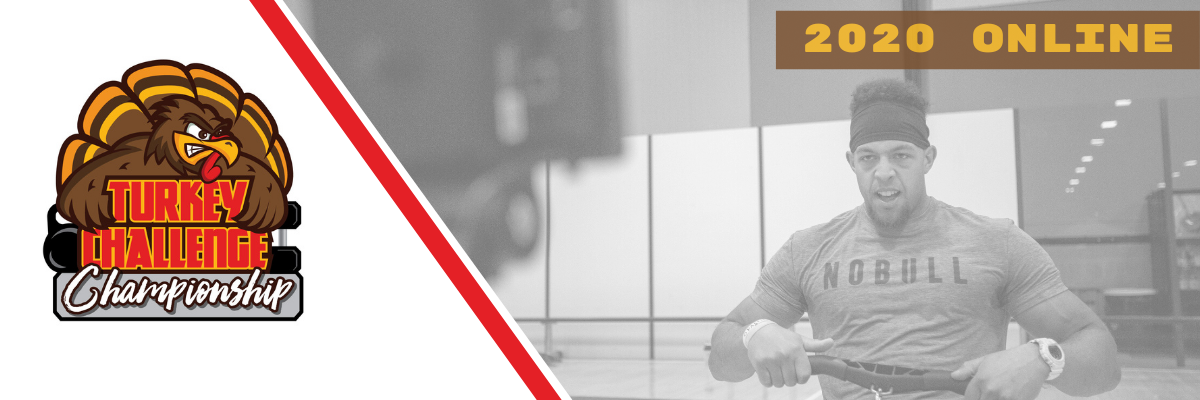
2020 Turkey Challenge
About This Competition
WELCOME TO 2020 TURKEY CHALLENGE (COVID STYLE)!
2020 certainly isn’t going as planned for most of us, and unfortunately the Turkey Challenge will be different this year too! We were hopeful we could find a way to make it work, but alas it’s time to concede and move on to option B. 2020 Turkey Challenge The Paindemic, since we will not be able to make an in person competition work we will be hosting a fun, yet competitive online comp. We will maintain our mission of bringing our community together with fitness, fun, and camaraderie! Information regarding the competition dates, workouts and divisions can all be found below. We hope you will grab a friend and sign up!
ABOUT
The 2020 Turkey Challenge will be an ONLINE ONLY format where we will be post 3+ workouts at once at 9:00AM MST on Wednesday, November 18th and athletes/teams will have 6 days to complete all workouts and submit their scores by Tuesday, November 24th at 9:00AM MST. At the end of the competition, scores will be calculated and overall winners will be announced.
DIVISIONS & PRIZES
To simplify the event this year, we will have only "Rx" and "Scaled" divisions, which is similar to the way the CrossFit Open has been done in the past. And, similar to previous years, athletes/teams will be able to compete as either individuals or 4-person (2 men/2 women) teams within those divisions.
New this year will be a function on the leaderboard to see where you stack up according to your age. During registration, you will be asked for your age as of November 20th, 2020, which at the end of the competition will allow you to see top performers within individual Rx and Scaled divisions according age brackets of 16-17, 18-34, 35-39, 40-44, 45-49, 50+, and 40+ for teams.
Prizes are still TBD and will be announced soon.
REGISTRATION
Registration is open now and will close at the closing of score submission on Tuesday, November 24th at 9:00AM MST. Cost to register is $20 for individuals and $80 for teams.
WORKOUTS, EQUIPMENT, TEAMS, & DIVISION STANDARDS EXPLAINED
For many different reasons, we've decided that this year's event should be accommodating to the fact that many of our challengers may be making it happen out of garage gyms, have had irregular training schedules, and/or might not have access to the same equipment/space that they have previously. That being said, we have done our best to maintain the integrity of the competition and will still be asking for you to get uncomfortable and test your limits!
Workouts:
- The workouts, or “events”, will be posted all at once at 9:00AM MST on Wednesday, November 18th. Each event/workout will be posted with specific instructions on how to compete with each division standards and requirements specifically explained in both writing and video and also include a scorecard to help with scoring.
- A posted workout may include multiple scores. For example, “part A” and “part B”, both of which must be completed to the minimum work requirements in order for either score to count.
- For Rx athletes/teams contending for top positions, you will be expected to have video proof of the effort and provide the link at score submission. Failure to provide video proof may disqualify your ability to maintain a top spot.
Equipment:
- No rowers, air bikes, or running routes will be required.
- All athletes will need the minimum of access to a barbell and bumper plates, box jump, jump rope, pull up bar, and dumbbell or kettlebell.
Divisions Standards:
- The Rx division is for athletes that can perform commonly prescribed CrossFit movements as Rx'd. If competing in this division, you should be prepared for the minimum of movements such as chin over pull ups, toes to bar, double-unders, as well as the ability to perform commonly prescribed barbell weights up to 315/205 lb. for deadlifts, 135/95 lb. for front/back squats and cleans, and 95/65 lb. for overhead squats, thrusters, and snatches. A minimum height 24/20" height box jump is required as well as a single 50/35 lb. dumbbell or 50/35 lb. kettlebell.
- The Scaled division is for athletes that are still building strength and consistency and will provide modified options for pull ups, toes to bar, and double-unders, as well as offer modified weights of up to 225/155 lb. for deadlifts, 95/65 lb. for front/back squats and cleans, and 75/55 lb. for overhead squats, thrusters, and snatches. A minimum of 20/16" height box jump is required as well as a single 35/20 lb. dumbbell or 35/20 lb. kettlebell.
Team Standards:
- A competing team will consist of (2) men and (2) women. In order to compete as a team, a Team Captain will register all four athletes in the appropriate division at registration (please have full names, email, dates of birth at registration)
- Teams will be required to complete the workouts together in person.
More information will be continued to be posted about the event as it get's closer on on www.turkeychallenge.com, Facebook, and Instagram pages.
**If your business/brand is interested in sponsoring the Turkey Challenge we would love to help you grow your brand! We are always looking for cool gear to award to the winners! For more information please email info@turkeychallenge.com.**
Source: Strongest Compete
Your results are already here.
Every competition you've entered, ranked workout by workout. Search your name and find your entire history.
Search the ResultsThe conversation is already happening.
Athletes are commenting, posting photos, and reliving the workouts. Jump in.
See the CommunityReady for what's next?
Browse upcoming competitions near you — your next event is probably already listed.
Find Competitions Near MeHow much stronger are you than last year?
Log PRs for every lift and benchmark workout. Your progress tells the story — KettleBoards keeps track.
Track Your PRsDivisions
Top Results
Top 5 finishers per division. View full results →
| # | Athlete | Points |
|---|---|---|
| 1 | Logan Ewing | 10 |
| 1 | Malachi Bennett | 10 |
| 3 | Luke Keeble | 16 |
| 4 | Brian Matthews | 20 |
| 5 | Zach Pollom | 22 |
| # | Athlete | Points |
|---|---|---|
| 1 | Cory Elston | 5 |
| 2 | Samuel Walter | 9 |
| 3 | Kyle Riley | 14 |
| 3 | Joe Comsti | 14 |
| 5 | Rick Zellen | 20 |
| # | Athlete | Points |
|---|---|---|
| 1 | Kelly Stone | 6 |
| 2 | Tayler Sykes | 11 |
| 3 | Gabby McClelland | 12 |
| 3 | Megan Markee | 12 |
| 5 | Jenny Gibb | 30 |
| # | Athlete | Points |
|---|---|---|
| 1 | Christine Ravel | 5 |
| 2 | Ellen Meyer | 7 |
| 3 | Helen Blish | 14 |
| 4 | Jodi Walter | 15 |
| 5 | Audrey Riley | 19 |
| # | Athlete | Points |
|---|---|---|
| 1 | Kale Potter | 9 |
| 2 | Maverick Miner | 10 |
| 2 | Blake Burke | 10 |
| 4 | Corban Christensen | 12 |
| 5 | Maximus Montgomery | 19 |
| # | Athlete | Points |
|---|---|---|
| 1 | Lo Smith | 4 |
| 2 | Lexie Miner | 10 |
| 3 | Tenley Horsfall | 11 |
| 4 | Payton Burke | 19 |
| 5 | Abby Stamback | 21 |
| # | Athlete | Points |
|---|---|---|
| 1 | KODA IRON VIEW | 5 |
| 2 | Technical Difficulties | 7 |
| 3 | Crossfit Arvada Alpha | 22 |
| 4 | Quaranteam | 23 |
| 5 | One Beat CrossFit | 26 |
| # | Athlete | Points |
|---|---|---|
| 1 | Feastmode | 7 |
| 2 | HanDanRobV | 11 |
| 2 | KC Crossfit B Team | 11 |
| 4 | Wild Turkeys | 16 |
| 5 | Burpees and Beer | 19 |
Workouts
On a 16:00 running clock
Part A (0:00 to 8:00):
Complete as many reps as possible in 8:00 of:
4-6-8-10-12-14...
Thruster
Lateral burpee over bar
Begin at 4 reps of each and increase by 2 reps after completion of each round.
VARIATIONS
Rx divisions:
Men use 95 lbs.
Women use 65 lbs.
Athletes 13-15 yo, and 55+ use 65/45 lb.
Scaled divisions:
Men use 65 lbs., step over allowed
Women use 45 lbs., step over allowed
Athletes 13-15 yo, and 55+ use 45/35 lb.
Part B (8:00 to 16:00):
8:00 mins to establish:
3RM Hang Clean
NOTES
This workout begins with the athlete standing at their bar. After the call of “3, 2, 1 ... go,” the athlete will have 8 minutes to begin working on the ascending ladder of thrusters and burpees over the bar. Part A of the workout is complete once the 8:00 time cap has been reached and the athlete will transition immediately into Part B. In Part B, the athlete will have from 8:00 to 16:00 to find a 3-rep hang clean. The highest successful lift counts toward the score.
This workout will have two scores, Part A and Part B.
EQUIPMENT
- Barbell, collars, and weights loaded to the appropriate level for your division
*The official weight is in pounds.
For each workout, be sure the athlete has adequate space to safely complete all the movements. Clear the area of all extra equipment, people or other obstructions. Any athlete who in any way alters the equipment or movements described in this document or shown in the workout video may be disqualified from the competition.
VIDEO SUBMISSION STANDARDS
All video submissions should be uncut and unedited in order to accurately display the performance. Prior to starting the workout, clearly show all the weights on the barbell. A clock or timer with the running workout time should be clearly visible throughout the entire workout. Shoot the video from an angle so all movements can be clearly seen meeting the movement standards. Videos shot with a fisheye lens or similar lens may be rejected due to the visual distortion these lenses cause.
MOVEMENT STANDARDS
Thruster - The bar must be taken from the ground each time and power or squat cleaned into a full squat where the crease of the hip passes below the top of the knee, and then “thrusted” overhead with arms extended and bar, shoulder, hip, and heels all in vertical alignment.
Lateral burpee over bar - The athlete begins from a standing position and then lowers and touches the chest to the ground (body in parallel with the bar) before getting back up and making a two foot jump over the bar. All Rx athletes will use full size “Olympic” bumper plates unless in the 13-15 or 55+ age groups, where they, along with scaled athletes, will have the option of using iron 10 lb. or 5 lb. weights, or empty bar, which make the bar lower. Only scaled athletes can choose to step over the bar if they would like.
Hang clean - This begins with the athlete first deadlifting the bar to the hang position. Then the athlete will clean it to the shoulders from the hang position. A squat or power clean may be used. All three reps should be done without the bar touching the ground or the athlete’s hands removing from the bar.
On a 16:00 running clock
Part A (0:00 to 8:00):
Complete as many reps as possible in 8:00 of:
4-6-8-10-12-14...
Thruster
Lateral burpee over bar
Begin at 4 reps of each and increase by 2 reps after completion of each round.
VARIATIONS
Rx divisions:
Men use 95 lbs.
Women use 65 lbs.
Athletes 13-15 yo, and 55+ use 65/45 lb.
Scaled divisions:
Men use 65 lbs., step over allowed
Women use 45 lbs., step over allowed
Athletes 13-15 yo, and 55+ use 45/35 lb.
Part B (8:00 to 16:00):
8:00 mins to establish:
3RM Hang Clean
NOTES
This workout begins with the athlete standing at their bar. After the call of “3, 2, 1 ... go,” the athlete will have 8 minutes to begin working on the ascending ladder of thrusters and burpees over the bar. Part A of the workout is complete once the 8:00 time cap has been reached and the athlete will transition immediately into Part B. In Part B, the athlete will have from 8:00 to 16:00 to find a 3-rep hang clean. The highest successful lift counts toward the score.
This workout will have two scores, Part A and Part B.
EQUIPMENT
- Barbell, collars, and weights loaded to the appropriate level for your division
*The official weight is in pounds.
For each workout, be sure the athlete has adequate space to safely complete all the movements. Clear the area of all extra equipment, people or other obstructions. Any athlete who in any way alters the equipment or movements described in this document or shown in the workout video may be disqualified from the competition.
VIDEO SUBMISSION STANDARDS
All video submissions should be uncut and unedited in order to accurately display the performance. Prior to starting the workout, clearly show all the weights on the barbell. A clock or timer with the running workout time should be clearly visible throughout the entire workout. Shoot the video from an angle so all movements can be clearly seen meeting the movement standards. Videos shot with a fisheye lens or similar lens may be rejected due to the visual distortion these lenses cause.
MOVEMENT STANDARDS
Thruster - The bar must be taken from the ground each time and power or squat cleaned into a full squat where the crease of the hip passes below the top of the knee, and then “thrusted” overhead with arms extended and bar, shoulder, hip, and heels all in vertical alignment.
Lateral burpee over bar - The athlete begins from a standing position and then lowers and touches the chest to the ground (body in parallel with the bar) before getting back up and making a two foot jump over the bar. All Rx athletes will use full size “Olympic” bumper plates unless in the 13-15 or 55+ age groups, where they, along with scaled athletes, will have the option of using iron 10 lb. or 5 lb. weights, or empty bar, which make the bar lower. Only scaled athletes can choose to step over the bar if they would like.
Hang clean - This begins with the athlete first deadlifting the bar to the hang position. Then the athlete will clean it to the shoulders from the hang position. A squat or power clean may be used. All three reps should be done without the bar touching the ground or the athlete’s hands removing from the bar.
For time:
10 Deadlifts
20 Pull ups
30 Box jumps
40 Sit Ups
50 Alternating dumbbell snatch
40 Sit Ups
30 Box jumps
20 Pull ups
10 Deadlifts
20-minute cap
VARIATIONS
Rx divisions:
Men use 255 lbs for deadlift, 24” box jump, and 50 lb. dumbbell.
Women use 175 lbs. for deadlift, 20” box jump, and 35 lb. dumbbell.
Athletes 13-15 yo, and 55+ use 175/125 lb. for deadlift, 24” box with step up allowed, 35/20 lb. dumbbell
Scaled divisions:
Men use 175 lb. for deadlift, 24” box with step up allowed, 35 lb. dumbbell, and jumping pull ups
Women use 115 lb. for deadlift, 20” box with step up allowed, 20 lb. dumbbell, and jumping pull ups
Athletes 13-15 yo, and 55+ use 135/95 lb. for deadlift, 24” box with step up allowed, 25/15 lb. dumbbell
NOTES
This workout begins with the athlete standing at their deadlift bar. After the call of “3, 2, 1 ... go,” the athlete will start working on the deadlifts. Once they are complete, they will move to pull ups, and continue in this fashion until they have completed all the movements or hit the time cap.
Score is the time taken to complete the workout. If the time cutoff is met, the athlete’s score will be the cap + reps not completed.
EQUIPMENT
- Barbell, collars, and weights loaded to the appropriate level for your division
- (1) Box to the appropriate height for your division
- (1) Dumbbell of the appropriate weight for your division
- Pullup bar
- An Abmat or other situp mat along with something to be used to hold the feet while doing situps may be used.
*The official weight is in pounds.
For each workout, be sure the athlete has adequate space to safely complete all the movements. Clear the area of all extra equipment, people or other obstructions. Any athlete who in any way alters the equipment or movements described in this document or shown in the workout video may be disqualified from the competition.
VIDEO SUBMISSION STANDARDS
All video submissions should be uncut and unedited in order to accurately display the performance. Prior to starting the workout, clearly show all the weights on the barbell. A clock or timer with the running workout time should be clearly visible throughout the entire workout. Shoot the video from an angle so all movements can be clearly seen meeting the movement standards. Videos shot with a fisheye lens or similar lens may be rejected due to the visual distortion these lenses cause.
MOVEMENT STANDARDS
Deadlift - This is a traditional deadlift with the hands outside the knees. Sumo deadlifts are not allowed. Starting with the barbell on the floor, the athlete lifts the bar until the hips and knees reach full extension, and the head and shoulders are behind the bar. The arms must be straight throughout. No bouncing.
Pull up - This is a standard chin-over-bar pullup. Dead hang, kipping or butterfly pull ups are allowed as long as all the requirements are met. The arms must be fully extended at the bottom, with the feet off the ground. Overhand, underhand or mixed grip are all permitted.
Pull up - This is a standard chin-over-bar pullup. Dead hang, kipping or butterfly pull ups are allowed as long as all the requirements are met. The arms must be fully extended at the bottom, with the feet off the ground. Overhand, underhand or mixed grip are all permitted. A rep is counted when the chin passes above the vertical plane of the bar. For scaled divisions, a jumping pull up may be used in which a box is placed underneath the pull up bar for “jumping” assistance. The height of the box is determined by when both of the athlete’s hands are raised standing on the box, the wrist is no more than 6” above the height of the bar. The pull up must still meet the range of motion standards where the arms are fully extended at the bottom of the pull up, and the chin must go over the vertical plane of the bar at the top.
Box Jump - Athlete starts with both feet on the ground and face the side of the box. Do not angle the box and jump or step up on the corner. Rx athletes must jump with a two-foot take off. Scaled athletes may jump or step up to the box. Stepping off the box for all athletes is allowed. Using hands to push on the legs for step ups is not allowed. A rep is credited when both feet are on the top of the box; and hips and knees are fully extended, with head and shoulders over the hips. Reaching extension in mid air is a no rep.
Situp - The begins with the athlete sitting vertical and spine tall. The legs should be forward with the knees bent, or in a “butterfly” position. Weights or another object may be used as an anchor for the feet. An Abmat or mat may be used to cushion/support the back, but is not required. The athlete will sit back, touch their hands to the ground above their head, then return forward to where their head is tall and shoulders are above the hips. Reps will not be counted if the athlete does not return to the fully upright position.
Alternating dumbbell snatch - The dumbbell snatch starts with the dumbbell on the ground and finishes with the dumbbell directly overhead. At the bottom of the movement, BOTH heads of the dumbbell must touch the ground. The dumbbell must be lifted overhead in one motion. Touch and go is permitted. Bouncing the dumbbell is not allowed. Athletes must alternate arms after each repetition and may not alternate until a successful rep is achieved. The non lifting hand and arm may not be in contact with the body during the repetition. At the top, the arms, hips, and knees must be fully locked out with the dumbbell clearly over the middle of the athlete’s body when viewed from profile. Once the athlete has reached lockout, the repetition will count.
Rx Variation
For time:
32 Toes to bar
80 Double unders
10 Single-arm overhead alternating reverse lunges*
60 Double unders
20 Single-arm overhead alternating reverse lunges*
40 Double unders
30 Single-arm overhead alternating reverse lunges*
20 Double unders
40 Single-arm overhead alternating reverse lunges*
16 Toes to bar
Men use 50 lbs. dumbbell
Women use 35 lbs. Dumbbell
Athletes 13-15 yo, and 55+ use 35/20 lb. dumbbell
Scaled Variation
For time:
32 knee raises
80 Single unders
10 Single-arm front rack alternating reverse lunges*
60 Single unders
20 Single-arm front rack alternating reverse lunges*
40 Single unders
30 Single-arm front alternating reverse lunges*
20 Single unders
40 Single-arm front rack alternating reverse lunges*
16 knee raises
Men use 35 lbs. dumbbell
Women use 20 lbs. Dumbbell
Athletes 13-15 yo, and 55+ use 25/15 lb. dumbbell
*The dumbbell must be switched in hands at the halfway point of each set.
Time cap for the workout is 16:00
NOTES
This workout begins with the athlete standing at their toes to the bar/knee raise station. After the call of “3, 2, 1 ... go,” the athlete will begin working on the “buy in” of 32 toes to bar or knee raises. Once complete, they will continue into the four rounds of jump rope and single arm overhead alternating reverse lunges, ensuring to switch the weight in the hand/front rack at the halfway point. The workout is complete once the final “cash out” set of toes to bar/knee-raises are complete.
Score is the time taken to complete the workout.
EQUIPMENT
- (1) Dumbbell of the appropriate weight for your division
- Pull up bar for toes to bar/knee raises
- Jump rope
*The official weight is in pounds.
For each workout, be sure the athlete has adequate space to safely complete all the movements. Clear the area of all extra equipment, people or other obstructions. Any athlete who in any way alters the equipment or movements described in this document or shown in the workout video may be disqualified from the competition.
VIDEO SUBMISSION STANDARDS
All video submissions should be uncut and unedited in order to accurately display the performance. Prior to starting the workout, clearly show all the weights on the barbell. A clock or timer with the running workout time should be clearly visible throughout the entire workout. Shoot the video from an angle so all movements can be clearly seen meeting the movement standards. Videos shot with a fisheye lens or similar lens may be rejected due to the visual distortion these lenses cause.
MOVEMENT STANDARDS
Toes to bar - The athlete must go from a full hang to having the toes touch the pull up bar. At the start of each rep, the arms must be fully extended with the feet off the ground, and the feet must be brought back behind the bar and the rest of the body. Both feet must contact the bar at the same time with the feet inside the hands.
Double unders/Single unders - For the double under, the rope must pass completely under the feet twice for each jump. For scaled divisions, the single under may be used in which the rope passes completely under the feet once for each jump. The rope must spin forward for the rep to count.
Single-arm overhead alternating reverse lunges - This movement begins with the dumbbell overhead, the feet together and the athlete standing tall with hips and knees extended. The athlete will step one leg backward so that the knee touches the ground. The dumbbell must remain above the height of the athletes’ head. If, during the lunge, either head of the dumbbell comes into contact with or falls below the level of the athlete’s head, the athlete must stop and return to do the rep again. The rep finishes when the athlete steps back forward to the standing position with the feet together and in alignment. The athletes are required to switch hands halfway through the set of lunges.
Single-arm front rack alternating reverse lunges - Same way as the overhead reverse lunge with the exception that the dumbbell is held in a front rack, versus overhead position. The front rack must be switched from one side to the other halfway through the set.
On a 8:00 running clock:
Part A: (0:00 to 4:00)
AMRAP in 4:00:
4-6-8-10-12…reps of:
Air squats or broomstick thrusters
Lateral burpees
Part B: (4:00 to 8:00)
(1) Max set of pull ups or bar hang
VARIATIONS
Under 8 divisions & 9-10 yo divisions:
Air squats
11-12 yo divisions:
Broomstick or PVC thrusters
NOTES
This workout begins with the athlete standing at their bar. After the call of “3, 2, 1 ... go,” the athlete will have 4 minutes to begin working on the ascending ladder of air squats or thrusters and burpees. Part A of the workout is complete once the 4:00 time cap has been reached and the athlete will transition immediately into Part B. In Part B, the athlete will have from 4:00 to 8:00 to find a max set of pull ups or timed bar hang.
This workout will have two scores, Part A and Part B.
EQUIPMENT
- Under 8 & 9-10 yo divisions: broomstick or PVC on the ground for jumping over + pull up bar
- 11-12 yo divisions: Broomstick or PVC for thrusters and jumping over for lateral burpees.
For each workout, be sure the athlete has adequate space to safely complete all the movements. Clear the area of all extra equipment, people or other obstructions. Any athlete who in any way alters the equipment or movements described in this document or shown in the workout video may be disqualified from the competition.
VIDEO SUBMISSION STANDARDS
NA. However, please feel free to video and tag @mbsturkeychallenge and #turkeychallenge2020 so we can see the effort!
MOVEMENT STANDARDS
Air squat - This is a standard air squat. The athlete will begin in a standing position with head and shoulder over hips, and knees fully extended. They will then lower down into a full squat where the crease of the hips pass below the top of the knee, then return back to a standing position.
Broomstick thrusters - This is a standard thruster movement where the athlete will move the broomstick or PVC from the bottom of the squat to a full locked out position overhead. The broomstick or PVC must be taken from the ground. The hip crease must pass clearly below the top of the knee. The rep is credited when the stick or PVC is directly overhead with the hips, arms, and knees fully extended with the stick directly over the athlete’s body.
Lateral burpees - This is a standard burpee where the athlete begins from a standing position, lowers and touches the chest to the ground, then returns to standing and jumps over the line or stick. A two foot jump is required. The rep is counted once the athlete jumps over the PVC or stick on the ground.
Pull up / bar hang - In both the pull up and har hang, the athlete will begin in a full-hang position with the arms straight and body below the bar. Overhead, switch, or chin grip may be used. For the pull up, the athlete will pull their chin to where it clearly goes over the vertical plan of the bar. Strict, kip, or butterfly motion may be used. A set is determined by the number that can be done without coming off the bar. For the timed bar hang, the timer will begin once the athlete comes to the hang position and is no longer supported. The set concludes once the athlete comes off the bar. For scoring purposes, pull ups will score higher than bar hang. Pull ups will be entered by using a full number (ie, enter the full # of reps in the score entry), whereas the bar hang will be entered as 0.___ where the timed hang is entered as the time behind the decimal. Email info@turkeychallenge.com for questions.
On a 8:00 running clock:
Part A: (0:00 to 4:00)
AMRAP in 4:00:
4-6-8-10-12…reps of:
Air squats or broomstick thrusters
Lateral burpees
Part B: (4:00 to 8:00)
(1) Max set of pull ups or bar hang
VARIATIONS
Under 8 divisions & 9-10 yo divisions:
Air squats
11-12 yo divisions:
Broomstick or PVC thrusters
NOTES
This workout begins with the athlete standing at their bar. After the call of “3, 2, 1 ... go,” the athlete will have 4 minutes to begin working on the ascending ladder of air squats or thrusters and burpees. Part A of the workout is complete once the 4:00 time cap has been reached and the athlete will transition immediately into Part B. In Part B, the athlete will have from 4:00 to 8:00 to find a max set of pull ups or timed bar hang.
This workout will have two scores, Part A and Part B.
EQUIPMENT
- Under 8 & 9-10 yo divisions: broomstick or PVC on the ground for jumping over + pull up bar
- 11-12 yo divisions: Broomstick or PVC for thrusters and jumping over for lateral burpees.
For each workout, be sure the athlete has adequate space to safely complete all the movements. Clear the area of all extra equipment, people or other obstructions. Any athlete who in any way alters the equipment or movements described in this document or shown in the workout video may be disqualified from the competition.
VIDEO SUBMISSION STANDARDS
NA. However, please feel free to video and tag @mbsturkeychallenge and #turkeychallenge2020 so we can see the effort!
MOVEMENT STANDARDS
Air squat - This is a standard air squat. The athlete will begin in a standing position with head and shoulder over hips, and knees fully extended. They will then lower down into a full squat where the crease of the hips pass below the top of the knee, then return back to a standing position.
Broomstick thrusters - This is a standard thruster movement where the athlete will move the broomstick or PVC from the bottom of the squat to a full locked out position overhead. The broomstick or PVC must be taken from the ground. The hip crease must pass clearly below the top of the knee. The rep is credited when the stick or PVC is directly overhead with the hips, arms, and knees fully extended with the stick directly over the athlete’s body.
Lateral burpees - This is a standard burpee where the athlete begins from a standing position, lowers and touches the chest to the ground, then returns to standing and jumps over the line or stick. A two foot jump is required. The rep is counted once the athlete jumps over the PVC or stick on the ground.
Pull up / bar hang - In both the pull up and har hang, the athlete will begin in a full-hang position with the arms straight and body below the bar. Overhead, switch, or chin grip may be used. For the pull up, the athlete will pull their chin to where it clearly goes over the vertical plan of the bar. Strict, kip, or butterfly motion may be used. A set is determined by the number that can be done without coming off the bar. For the timed bar hang, the timer will begin once the athlete comes to the hang position and is no longer supported. The set concludes once the athlete comes off the bar. For scoring purposes, pull ups will score higher than bar hang. Pull ups will be entered by using a full number (ie, enter the full # of reps in the score entry), whereas the bar hang will be entered as 0.___ where the timed hang is entered as the time behind the decimal. Email info@turkeychallenge.com for questions.
For time:
10 Deadlifts,
15 Box/stair step ups
20 sit ups
25 Jumping jacks
20 Sit Ups
15 Box/stair step ups
10 Deadlifts
VARIATIONS
Under 8 divisions:
Deadlift object 10-15 lb, 6-10” box/stair step up
9-10 yo divisions:
Deadlift object 15-25 lb., 12-16” box/stair step up
11-12 yo divisions:
Deadlift object 25-35 lb., 12-16” box/stair step up
NOTES
This workout begins with the athlete standing at the deadlift station. After the call of “3, 2, 1 ... go,” the athlete will begin the deadlift set. Once complete, they will move to the box/stair step up, then move to the situps, and then to jumping jacks. They will continue back down the ladder until finished. The workout is complete once the final set of deadlifts is complete.
Score is the time taken to complete the workouts.
EQUIPMENT
- Deadlift object weighted according to the age division.
- Box or stair to the appropriate weight for the age division.
- An abmat or mat along with anchor for the feet may be used in the situps if desired. We HIGHLY recommend anchoring the kids feet.
*The official weight is in pounds.
For each workout, be sure the athlete has adequate space to safely complete all the movements. Clear the area of all extra equipment, people or other obstructions. Any athlete who in any way alters the equipment or movements described in this document or shown in the workout video may be disqualified from the competition.
VIDEO SUBMISSION STANDARDS
NA. However, please feel free to video and tag @mbsturkeychallenge and #turkeychallenge2020 so we can see the effort!
MOVEMENT STANDARDS
Deadlift - Creativity is completely fine here. Use either one or two objects as needed to make up the weight. Ie, this may be two water bottles or dumbbells, or may be a single kettlebell or even a rock that’s been weighed as the correct weight range. The idea is that at the bottom, the hand hold is roughly mid-shin height similar to a traditional bar height and that the athlete will lift the weight/object from the ground to a standing position where the head and shoulders are behind the weight, hips and knees fully open.
Box/stair step up - Again, creativity is fine here. The intent is to be a step, not jump, up to the top of the box or stair. Athletes may alternate legs, but it is not required. At the top, both feet must be on top of the box or stair with the athlete standing, hips fully open and knees extended. They may step or jump down. Most importantly, ensure the safety of the athlete by choosing something stable that will not tip over.
Situp - This begins with the athlete sitting vertical and spine tall. The legs should be forward with the knees bent, or in a “butterfly” position. Weights or a parent holding the feet as an anchor is HIGHLY recommended. An Abmat or mat may be used to cushion/support the back, but is not required. The athlete will sit back, touch their hands to the ground above their head, then return forward to where their head is tall and shoulders are above the hips. Reps will not be counted if the athlete does not return to the fully upright position.
Jumping Jack - The jumping jack begins with the athlete standing with arms at the sides and feet together. They will jump while extending their feet to the sides in either direction and bringing their hands to touch overhead. They will then jump again to the beginning position by bringing the feet back together and arms to the sides. The rep is counted once returning to the beginning position.
For time:
16 Mountain climbers
40 Broomstick jumps
20 Walking lunge steps
30 Broomstick jumps
15 Walking lunge steps
20 Broomstick jumps
10 Walking lunge steps
10 Broomstick jumps
5 Walking lunge steps
8 Mountain climbers
VARIATIONS
All divisions:
Broomstick or PVC on the ground
Score is the total time taken to complete the workout.
NOTES
This workout begins with the athlete standing at the mountain climbers station. After the call of “3, 2, 1 ... go,” the athlete will do the “buy in” set of mountain climbers. Once complete, they will move to the first set of broomstick or PVC jumps. Once complete, they will move to the first set of walking lunge steps. The athlete will continue progressing through the workout, completing each exercise before moving forward. The workout is complete when the final “cash out” set of mountain climbers is complete.
EQUIPMENT
- Broomstick or PVC to jump over.
For each workout, be sure the athlete has adequate space to safely complete all the movements. Clear the area of all extra equipment, people or other obstructions. Any athlete who in any way alters the equipment or movements described in this document or shown in the workout video may be disqualified from the competition.
VIDEO SUBMISSION STANDARDS
NA. However, please feel free to video and tag @mbsturkeychallenge and #turkeychallenge2020 so we can see the effort!
MOVEMENT STANDARDS
Mountain climbers - This movement is done in a plank position on the hands. The athlete will pull one knee up and in toward the midsection touching the toe at a higher place on the ground. They will then alternate the action with the other knee. A repetition is counted EACH time the knee/foot come ups and toes touch the ground.
Broomstick jumps - A broomstick or PVC will be placed on the ground and the athlete will jump from two feet to the other side of the stick. A rep is counted once both feet land on the other side of the stick.
Walking lunge steps - This is a standard walking lung where the athlete will begin in a standing position, then take a step forward to where the trailing knee “kisses” the ground, then step forward back into the standing position. Using hands on the knees to assist the get up is not allowed.
On a 22:00 running clock
Part A.
From 0:00 to 12:00, complete as many reps as possible of the relay:
FF Pair - 4 Thrusters/4 Burpees over bar
FF Pair - 4 Burpees over bar/4 Thrusters
MM Pair - 4 Thrusters/4 Burpees over bar
MM Pair - 4 Burpees over bar/4 Thrusters
Once the male pair finish their portion, return to the beginning, but add 2 reps to each exercise. So, the second round will be 6 reps of each, the third round will be 8 reps, fourth will be 10 reps, and so on.
Rx
Men use a bar loaded with bumper plates to 95 lb. for thrusters. Lateral burpees over the women's bar.
Women use a bar loaded with bumper plates to 65 lb. for thrusters. Lateral burpees over the men’s bar.
Scaled
Men use a bar loaded with bumper plates to 65 lb. for thrusters. Lateral burpees over the men’s bar with stepping allowed.
Women use a bar loaded with bumper plates to 45 lb. for thrusters. Lateral burpees over the men’s bar with stepping allowed.
Part A score is the total of all reps completed within the time limit. Refer to the scorecard for scoring clarification.
Part B.(from 12:00-22:00)
Each team member, find a 3RM hang clean.
Power or squat variation is acceptable. Bar must begin from the hang position and cannot touch the ground in between reps. Only one bar will be used for Part B (either 35 lb. or 45 lb. bar is acceptable). Athletes may lift in any order and there is no minimum or maximum number of attempts allowed per athlete.
Part B score is the sum of each team member's highest successful lift.
NOTES
Part A of this workout begins with the female athletes standing at the two bars. After the call of “3, 2, 1 ... go,” both females will begin working on the relay by completing their first exercise- one will begin on the thrusters, and the other on the lateral burpees over the bar. Both athletes may work at the same time and do not have to be in synchro. Once each athlete has completed the first exercise, they will switch positions and complete the second exercise- the female that started on the thrusters will move to the burpees over bar, and the female that started on the burpees over bar will move to the thrusters. Once both females have completed both exercises, they will each tag a male teammate to replace them. The males will then execute in the same fashion with the same number of reps on both exercises. Once both males have completed both exercises, they will then tag a female to replace them and continue the relay. However, after each completed round of the relay, 2 reps are added to each exercise.
Part B of this workout begins immediately at the time cap of Part A and goes for 10 minutes until 22:00 on the running clock. Only one bar will be used for Part B (either 35 lb. or 45 lb. bar is acceptable). Athletes may lift in any order and there is no minimum or maximum number of attempts allowed per athlete.
EQUIPMENT
- Barbell, collars, and weights loaded to the appropriate level for your division
*The official weight is in pounds.
For each workout, be sure the athlete has adequate space to safely complete all the movements. Clear the area of all extra equipment, people or other obstructions. Any athlete who in any way alters the equipment or movements described in this document or shown in the workout video may be disqualified from the competition.
VIDEO SUBMISSION STANDARDS
All video submissions should be uncut and unedited in order to accurately display the performance. Prior to starting the workout, clearly show all the weights on the barbell. A clock or timer with the running workout time should be clearly visible throughout the entire workout. Shoot the video from an angle so all movements can be clearly seen meeting the movement standards. Videos shot with a fisheye lens or similar lens may be rejected due to the visual distortion these lenses cause.
MOVEMENT STANDARDS
Thruster - The bar must be taken from the ground each time and power or squat cleaned into a full squat where the crease of the hip passes below the top of the knee, and then “thrusted” overhead with arms extended and bar, shoulder, hip, and heels all in vertical alignment.
Lateral burpee over bar - The athlete begins from a standing position and then lowers and touches the chest to the ground (body in parallel with the bar) before getting back up and making a two foot jump over the bar. All Rx athletes will use full size “Olympic” bumper plates and use a two footed jump over the bar. Scaled athletes have the option of using iron 10 lb. or 5 lb. weights, which make the bar lower, and they can choose to step over the bar if they would like.
Hang clean - This begins with the athlete first deadlifting the bar to the hang position. Then the athlete will clean it to the shoulders from the hang position. A squat or power clean may be used. All three reps should be done without the bar touching the ground or the athlete’s hands removing from the bar.
On a 22:00 running clock
Part A.
From 0:00 to 12:00, complete as many reps as possible of the relay:
FF Pair - 4 Thrusters/4 Burpees over bar
FF Pair - 4 Burpees over bar/4 Thrusters
MM Pair - 4 Thrusters/4 Burpees over bar
MM Pair - 4 Burpees over bar/4 Thrusters
Once the male pair finish their portion, return to the beginning, but add 2 reps to each exercise. So, the second round will be 6 reps of each, the third round will be 8 reps, fourth will be 10 reps, and so on.
Rx
Men use a bar loaded with bumper plates to 95 lb. for thrusters. Lateral burpees over the women's bar.
Women use a bar loaded with bumper plates to 65 lb. for thrusters. Lateral burpees over the men’s bar.
Scaled
Men use a bar loaded with bumper plates to 65 lb. for thrusters. Lateral burpees over the men’s bar with stepping allowed.
Women use a bar loaded with bumper plates to 45 lb. for thrusters. Lateral burpees over the men’s bar with stepping allowed.
Part A score is the total of all reps completed within the time limit. Refer to the scorecard for scoring clarification.
Part B.(from 12:00-22:00)
Each team member, find a 3RM hang clean.
Power or squat variation is acceptable. Bar must begin from the hang position and cannot touch the ground in between reps. Only one bar will be used for Part B (either 35 lb. or 45 lb. bar is acceptable). Athletes may lift in any order and there is no minimum or maximum number of attempts allowed per athlete.
Part B score is the sum of each team member's highest successful lift.
NOTES
Part A of this workout begins with the female athletes standing at the two bars. After the call of “3, 2, 1 ... go,” both females will begin working on the relay by completing their first exercise- one will begin on the thrusters, and the other on the lateral burpees over the bar. Both athletes may work at the same time and do not have to be in synchro. Once each athlete has completed the first exercise, they will switch positions and complete the second exercise- the female that started on the thrusters will move to the burpees over bar, and the female that started on the burpees over bar will move to the thrusters. Once both females have completed both exercises, they will each tag a male teammate to replace them. The males will then execute in the same fashion with the same number of reps on both exercises. Once both males have completed both exercises, they will then tag a female to replace them and continue the relay. However, after each completed round of the relay, 2 reps are added to each exercise.
Part B of this workout begins immediately at the time cap of Part A and goes for 10 minutes until 22:00 on the running clock. Only one bar will be used for Part B (either 35 lb. or 45 lb. bar is acceptable). Athletes may lift in any order and there is no minimum or maximum number of attempts allowed per athlete.
EQUIPMENT
- Barbell, collars, and weights loaded to the appropriate level for your division
*The official weight is in pounds.
For each workout, be sure the athlete has adequate space to safely complete all the movements. Clear the area of all extra equipment, people or other obstructions. Any athlete who in any way alters the equipment or movements described in this document or shown in the workout video may be disqualified from the competition.
VIDEO SUBMISSION STANDARDS
All video submissions should be uncut and unedited in order to accurately display the performance. Prior to starting the workout, clearly show all the weights on the barbell. A clock or timer with the running workout time should be clearly visible throughout the entire workout. Shoot the video from an angle so all movements can be clearly seen meeting the movement standards. Videos shot with a fisheye lens or similar lens may be rejected due to the visual distortion these lenses cause.
MOVEMENT STANDARDS
Thruster - The bar must be taken from the ground each time and power or squat cleaned into a full squat where the crease of the hip passes below the top of the knee, and then “thrusted” overhead with arms extended and bar, shoulder, hip, and heels all in vertical alignment.
Lateral burpee over bar - The athlete begins from a standing position and then lowers and touches the chest to the ground (body in parallel with the bar) before getting back up and making a two foot jump over the bar. All Rx athletes will use full size “Olympic” bumper plates and use a two footed jump over the bar. Scaled athletes have the option of using iron 10 lb. or 5 lb. weights, which make the bar lower, and they can choose to step over the bar if they would like.
Hang clean - This begins with the athlete first deadlifting the bar to the hang position. Then the athlete will clean it to the shoulders from the hang position. A squat or power clean may be used. All three reps should be done without the bar touching the ground or the athlete’s hands removing from the bar.
In MF pairs, complete for time:
75 Synchro Pull ups
75 Synchro Box jumps
75 Synchro Sit Ups
75 Synchro Alternating dumbbell snatch
In order for the working pair to earn reps, the other MF pair must be holding the top of the deadlift.
20-minute cap.
VARIATIONS
Rx divisions:
Men use 255 lbs for deadlift hold, 24” box jump, and 50 lb. dumbbell.
Women use 175 lbs. for deadlift hold, 20” box jump, and 35 lb. dumbbell.
Scaled divisions:
Men use 175 lb. for deadlift hold, 24” box with step ups allowed, 35 lb. dumbbell, and jumping pull ups
Women use 115 lb. for deadlift hold, 20” box with step ups allowed, 20 lb. dumbbell, and jumping pull ups
Score is the time to complete the workout.
NOTES
This workout begins with the MF pairs at their stations - MF pair 1 will be at the pull up station, while MF pair 2 will be at the deadlift bars. After the call of “3, 2, 1 ... go,” MF pair 2 will lift the deadlift bars so that MF pair 1 can begin working on the chipper. The team may switch out either one or two athletes from the chipper to the deadlift station as often as they would like. Once the pull up station is complete, the team will move to the box jumps, then the situps, and finally dumbbell snatch. Reps done in the chipper without both deadlift bars being locked out in the top of the deadlift DO NOT COUNT!!!
EQUIPMENT
- (2) Barbells for deadlift hold, collars, and weights loaded to the appropriate level for your division
- (2) Boxes to the appropriate height for your division
- (2) Dumbbell of the appropriate weight for your division
- Pullup bar
- An Abmat or other situp mat along with something to be used to hold the feet while doing situps may be used.
For each workout, be sure the athlete has adequate space to safely complete all the movements. Clear the area of all extra equipment, people or other obstructions. Any athlete who in any way alters the equipment or movements described in this document or shown in the workout video may be disqualified from the competition.
VIDEO SUBMISSION STANDARDS
All video submissions should be uncut and unedited in order to accurately display the performance. Prior to starting the workout, clearly show all the weights on the barbell. A clock or timer with the running workout time should be clearly visible throughout the entire workout. Shoot the video from an angle so all movements can be clearly seen meeting the movement standards. Videos shot with a fisheye lens or similar lens may be rejected due to the visual distortion these lenses cause.
MOVEMENT STANDARDS
Deadlift hold - This is a traditional deadlift with the hands outside the knees. Sumo deadlifts are not allowed. Starting with the barbell on the floor, each of the athletes will lift their own bars to top position and hold. At the top, the athlete’s hips and knees must maintain full extension, and the head and shoulders are behind the bar. The arms must be straight throughout. No straps or assistance of any sort may be used to hold onto the bar. A switch or hook grip may be used.
Synchro Pull up - This is a standard chin-over-bar pullup. Dead hang, kipping or butterfly pull ups are allowed as long as all the requirements are met. The arms must be fully extended at the bottom, with the feet off the ground. Overhand, underhand or mixed grip are all permitted. A rep is counted when each of the partner's chins pass above the bar at the same time. For scaled divisions, a jumping pull up may be used in which a box is placed underneath the pull up bar for “jumping” assistance. The height of the box is determined by when both of the athlete’s hands are raised standing on the box, the wrist is no more than 6” above the height of the bar. The pull up must still meet the range of motion standards where the arms are fully extended at the bottom of the pull up, and the both of the partner’s chins must go over the vertical plane of the bar at the top at the same time.
Synchro Box Jump - This is a standard box jump. Athlete’s start with both feet on the ground and face the side of their box. Do not angle the box and jump or step up on the corner. Rx athletes must jump with a two-foot take off. Scaled athletes may jump or step up to the box. Stepping off the box for all athletes is allowed. Using hands to push on the legs for step ups is not allowed. A rep is credited when both athletes have both feet on the top of the box; and hips and knees are fully extended, with head and shoulders over the hips. Reaching extension in mid air is a no rep.
Synchro Situp - The begins with each of the athletes sitting vertical and spine tall. They may be facing or beside each other. The legs should be forward with the knees bent, or in a “butterfly” position. Weights or another object may be used as an anchor for the feet. Together, the athletes will sit back, touch their hands to the ground above their head, then return forward to where their head is tall and shoulders are above the hips. In order for the rep to count, athletes must be at the top of each completed rep at the same time. Reps will not be counted if the athlete does not return to the fully upright position.
Synchro Alternating dumbbell snatch - The dumbbell snatch starts with the dumbbell on the ground and finishes with the dumbbell directly overhead. Athletes may face, or stand beside each other. At the bottom of the movement, BOTH heads of the dumbbell must touch the ground. The dumbbell must be lifted overhead in one motion. Touch and go is permitted. Bouncing the dumbbell is not allowed. Athletes must alternate arms after each repetition and may not alternate until a successful rep is achieved. The non lifting hand and arm may not be in contact with the body during the repetition. At the top, the arms, hips, and knees must be fully locked out with the dumbbell clearly over the middle of the athlete’s body when viewed from profile. In order for the rep to count, both athletes must complete the rep together and have the DB’s in the overhead position at the same time.
For Time:
32 Synchro DB facing burpees
160 Double unders (40 each)
10 Synchro Single-arm overhead alternating reverse lunges*
160 Double unders (40 each)
20 Synchro Single-arm overhead alternating reverse lunges*
160 Double unders (40 each)
30 Synchro Single-arm overhead alternating reverse lunges*
160 Double unders (40 each)
40 Synchro Single-arm overhead alternating reverse lunges*
16 Synchro DB facing burpees
20-min cap
VARIATIONS
Rx divisions:
Men use 50 lbs. dumbbell
Women use 35 lbs. Dumbbell
Scaled divisions:
35/20 lb. Single-arm front rack alternating reverse lunges*, same number (40 reps) single unders
*The dumbbell must be switched in hands at the halfway point of each set.
Score is the time to complete the workout.
NOTES
This workout begins with all athletes standing in front of their dumbbells on the ground. After the call of “3, 2, 1 ... go,” all athletes will begin together with 32 synchro dumbbell facing burpees. Once complete, they will move forward to double/single unders, where they will work at the same time to complete 50 double unders (or single unders for scaled) each. Once each athlete has completed their jump rope set, the team will move to the first set of synchro single arm overhead dumbbell reverse lunges, ensuring to switch sides at the halfway point. Once the reps are complete, the team will move to the jump rope and complete in the same fashion as round 1. After the fourth round of synchro dumbbell overhead reverse lunges is complete, the athletes will finish the workout with 16 final synchro dumbbell facing burpees. Refer to movement standards below.
EQUIPMENT
- (4) dumbbells of the appropriate weight for your division
- Jump ropes
For each workout, be sure the athlete has adequate space to safely complete all the movements. Clear the area of all extra equipment, people or other obstructions. Any athlete who in any way alters the equipment or movements described in this document or shown in the workout video may be disqualified from the competition.
VIDEO SUBMISSION STANDARDS
All video submissions should be uncut and unedited in order to accurately display the performance. Prior to starting the workout, clearly show all the weights on the barbell. A clock or timer with the running workout time should be clearly visible throughout the entire workout. Shoot the video from an angle so all movements can be clearly seen meeting the movement standards. Videos shot with a fisheye lens or similar lens may be rejected due to the visual distortion these lenses cause.
MOVEMENT STANDARDS
Synchro dumbbell facing burpees - Similar to a bar facing burpee, the athlete begins standing, lowers the chest to touch the ground, with the head behind the DB, then returns to standing before jumping over their dumbbell ensuring the feet pass clearly over the dumbbell as opposed to around the sides. In the synchro burpee, all athletes must have their chests on the ground at the same time. The rep is counted when all athletes have had their chest on the ground at the same time, then return to their feet and get to the other side of the dumbbell.
Double unders/Single unders - For the double under, the rope must pass completely under the feet twice for each jump. For scaled divisions, the single under may be used in which the rope passes completely under the feet once for each jump. The rope must spin forward for the rep to count.
Synchro single arm overhead dumbbell reverse lunge - This movement begins with all athletes holding the dumbbell overhead, the feet together and standing tall with hips and knees extended. At the same time, the athletes will step one leg backward so that the knee touches the ground simultaneously. The athletes will then step forward to where the feet return together again. Both the bottom and the top of the rep must stay within synchronization - all four athletes at the bottom, then all four athletes at the top. Teams do not have to alternate feet (however, it’s recommended), but they must switch the carrying side of the dumbbell at the halfway point. If the dumbbell of any one athlete falls below the height of their head, touches their body or the ground, the rep for the entire team may need to be started over.
Media
Community
Event Details
Closes: Nov 24, 2020

Find Your Next Competition
Browse hundreds of CrossFit and functional fitness competitions worldwide.

Our goal is to bring the functional fitness competition community together. Organizing information and bringing valuable resources to the space.
Useful Links
Explore More
Competition Resources
Personal Records